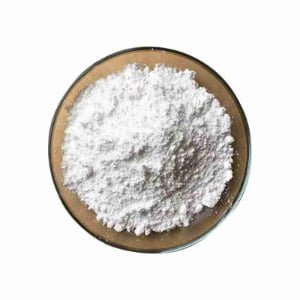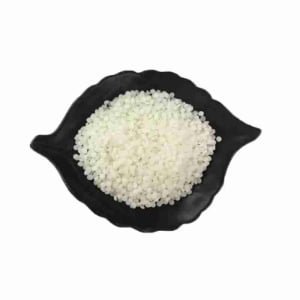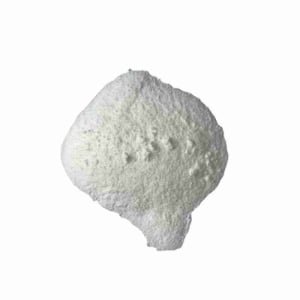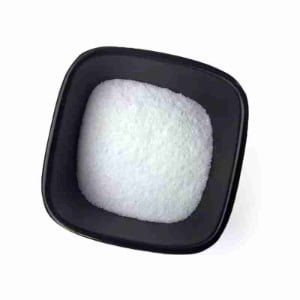
Decyl glucoside CAS#68515-73-1
Fast Delivery

Quality Assured

24h Response

7-15 Day Ship

Decyl glucoside CAS#68515-73-1

Decyl glucoside, scientifically known as ??-D-Glucopyranoside, is a non-ionic surfactant derived from renewable resources, such as glucose and fatty alcohols. It is a biodegradable and mild alternative to traditional surfactants, making it a preferred choice for eco-friendly and sensitive skin formulations. This compound is characterized by its ability to form stable emulsions and foams, which are essential properties in a variety of applications, including personal care products and household cleaning agents. Decyl glucoside is valued for its low irritation potential and excellent skin compatibility, making it suitable for use in baby care and cosmetic products. Chemically, decyl glucoside features a hydrophilic head and a hydrophobic tail, allowing it to effectively reduce surface tension and solubilize oils in water. Its mildness and biodegradability contribute to its use in formulations that require gentle cleansing without compromising the integrity of the skin's natural barrier. <p class="last-node">In summary, decyl glucoside is a versatile and sustainable surfactant that offers a balance of performance and safety. Its eco-friendly profile and compatibility with sensitive skin types make it an ideal ingredient for a wide range of personal care and cleaning products.</p>

Fast Response Guaranteed
sales@didichem.com
+86-15288742231

Decyl glucoside, scientifically known as ??-D-Glucopyranoside, is a non-ionic surfactant derived from renewable resources, such as glucose and fatty alcohols. It is a biodegradable and mild alternative to traditional surfactants, making it a preferred choice for eco-friendly and sensitive skin formulations.

This compound is characterized by its ability to form stable emulsions and foams, which are essential properties in a variety of applications, including personal care products and household cleaning agents. Decyl glucoside is valued for its low irritation potential and excellent skin compatibility, making it suitable for use in baby care and cosmetic products.

Chemically, decyl glucoside features a hydrophilic head and a hydrophobic tail, allowing it to effectively reduce surface tension and solubilize oils in water. Its mildness and biodegradability contribute to its use in formulations that require gentle cleansing without compromising the integrity of the skin’s natural barrier.

In summary, decyl glucoside is a versatile and sustainable surfactant that offers a balance of performance and safety. Its eco-friendly profile and compatibility with sensitive skin types make it an ideal ingredient for a wide range of personal care and cleaning products.

Description

Decyl glucoside Chemical Properties
density 1.15 g/mL at 20 ??C
form liquid
InChI InChI=1/C16H32O6/c1-2-3-4-5-6-7-8-9-10-21-16-15(20)14(19)13(18)12(11-17)22-16/h12-20H,2-11H2,1H3/t12-,13-,14+,15-,16?/s3
InChIKey JDRSMPFHFNXQRB-TVHDANIINA-N
SMILES O(CCCCCCCCCC)C1O[C@H](CO)[C@@H](O)[C@H](O)[C@H]1O |&1:13,16,18,20,r|
EPA Substance Registry System Oligomeric D-glucopyranose decyl octyl glycosides (68515-73-1)
Decyl glucoside Usage And Synthesis
Uses Triton??CG-110 can be used:

  • In the preparation of multilamellar vesicles as carriers for tretinoins and retinoids.
  • In the study of mineralization, leaching, and adsorption of glyphosate herbicide in the soil.
Uses Decyl Glucoside is a nonionic surfactant used as a foamer, detergent, conditioner or emulsifier. It can be used as a base surfactant or co-surfactant in detergents. It has excellent foaming ability and good skin compatibility. It can be combined with other glucosides using to enhance foaming and skin conditioning properties. It can also be utilised in ionic formulations in order to increase foam depth and emulsification properties. Commonly used in shampoos and body washes.
General Description This product is a biodegradable surfactant and is aligned with the 10th principle of Green Chemistry “Design for Degradation”.
Contact allergens Decyl glucoside or decyl d-glucoside, also named decylbeta- d-glucopyranoside, belongs to the alkyl glucosides family and is obtained by condensation of the fatty alcohol decyl alcohol and a d-glucose polymer. This nonionic surfactant and cleansing agent has been widely used for several years, due to its foaming power and good tolerance in rinse-off products such as shampoos, hair dyes and colors, and soaps. Decyl glucoside is also employed in leave-on products such as no-rinsing cleansing milks, lotions, and several sunscreen agents and is contained as a stabilizing surfactant of organic microparticles in sunscreen agent Tinosorb? M.
Side effects The Cosmetic Ingredient Review expert panel, or the CIR, deemed Decyl glucoside is completely safe for use, amongst its assessment of nineteen other alkyl glucosides. However, in rare cases, when the individual is hypersensitive towards decyl glucoside, there could be irritation, redness, itching, or burning on the skin. In some cases, this results in contact dermatitis, when the individual has type-4 hypersensitivity to decyl glucoside.
Synthesis Decyl glucosides (DGs) were prepared from D-glucose with 1-decanol by direct glucosidation over the zeolite catalysts. D-glucose (2.5 g) and 1-decanol (50 mL) were introduced as the reactants. The reactants were put into the reactor with the zeolite catalyst. The reaction was carried out directly in the reactor, stirring at 130 ??[1].
References [1] Kyong-Hwan Chung. ??Decyl Glucoside Synthesized by Direct Glucosidation of D-Glucose Over Zeolite Catalysts and Its Estrogenicity as Non-Endocrine Disruptive Surfactant.?? Journal of nanoscience and nanotechnology 19 2 (2019): 1172?C1175.

Why Choose DidiChem

Solving the pain points of high MOQ and slow delivery for labs, startups, and R&D teams.

24-Hour Response

Fast quotation and delivery date confirmation for all urgent orders.

Small Batch Ready

No excessive minimum order quantities. We serve small-batch and trial production.

Custom Synthesis

Flexible production system for customized chemical synthesis on demand.

Full After-Sales

Complete logistics tracking and dedicated after-sales support team.

Quick Inquiry

Request a Quote

Fill in your requirements and we'll respond within 24 hours.

Submitting your inquiry...

By submitting, you agree to be contacted by our team. We respect your privacy.

Direct Contact

Get in Touch Now

Phone / WhatsApp

+86-15288742231

Email

sales@didichem.com

Address

Room 1001, Bldg 1, Hisense Chuangzhi Valley, Fenghuang Road, High-tech Zone, Jinan, Shandong, China

Our Commitment

  • Quote within 24 hours
  • 📦 Small batch orders welcome
  • 🔬 Custom synthesis available
  • 🚚 7-15 day delivery
  • 📋 CoA & documentation provided
  • 🛡️ Quality guaranteed

Who We Serve

University Labs Research Institutes Startup Companies Pharma R&D Chemical Engineers Pilot Production

Related Products

You might also be interested in these products.

Capryloyl Glycine CAS #14246-53-8 Daily Chemicals

Capryloyl Glycine CAS #14246-53-8

Capryloyl glycine is the main component of dermal structural protein and plays an extremely important job in the skin. One of its functions is to balance the pH value. The reason why the skin??s pH is around 5.5 is because it contains various weak acids, proteins and fats. When different ingredients react with the skin??s fatty proteins, these proteins undergo decarboxylation reactions, thereby changing the skin??s pH. Too high or too low pH is not good, especially for acne-prone skin. Many studies have concluded that skin with acne-prone skin has a higher pH value. The presence of Capryloyl glycine can provide free carboxyl groups and maintain the balance of skin pH.

View Details
SODIUM ETHYL 2-SULFOLAURATE CAS#7381-01-3 Daily Chemicals

SODIUM ETHYL 2-SULFOLAURATE CAS#7381-01-3

Sodium Ethyl 2-Sulfolaurate is a surfactant with a unique combination of properties. It is an anionic compound, derived from the sulfonation of ethyl laurate, which is then neutralized with sodium hydroxide. This results in a product that is highly effective in lowering the surface tension of water, making it an excellent wetting agent and emulsifier. It is commonly used in personal care products, detergents, and industrial applications for its foaming and dispersing capabilities. As a mild and biodegradable ingredient, it is favored for its environmental and skin-friendly attributes, ensuring safety and performance in a variety of formulations.

View Details
LAURIC ACID MONOETHANOLAMIDE CAS#142-78-9 Daily Chemicals

LAURIC ACID MONOETHANOLAMIDE CAS#142-78-9

Lauric Acid Monoethanolamide is a chemical compound derived from lauric acid, a saturated fatty acid found in coconut oil and palm kernel oil. It is commonly used as an emulsifier and surfactant in various industrial applications, including the production of personal care products, detergents, and lubricants. This compound enhances the stability and texture of formulations, making it an essential ingredient for creating smooth, homogenous mixtures. Its properties contribute to improved product performance and consumer satisfaction.

View Details
2-Methyl-4-isothiazolin-3-one CAS#2682-20-4 Daily Chemicals

2-Methyl-4-isothiazolin-3-one CAS#2682-20-4

2-Methyl-4-isothiazolin-3-one, commonly referred to as MI, is a potent, synthetic preservative widely used in the cosmetic and personal care industry. This organic compound, with the chemical formula C4H5NOS, is a member of the isothiazolinone family known for its broad-spectrum antimicrobial activity. MI is effective against a variety of microorganisms, including bacteria, yeasts, and molds, making it an ideal preservative for formulations that require protection from spoilage and contamination. It is particularly valued for its ability to provide long-lasting protection even at low concentrations. As a preservative, MI is recognized for its compatibility with a wide range of cosmetic ingredients and its ability to be used in leave-on and rinse-off products. Its stability in different pH ranges and resistance to heat and light further contribute to its utility in various formulations. <p class="last-node">In summary, 2-Methyl-4-isothiazolin-3-one is a reliable and efficient preservative, offering robust antimicrobial protection for a diverse array of products. Its versatility and effectiveness make it a preferred choice for maintaining the integrity and safety of cosmetic and personal care products.</p>

View Details
Need This Product Fast?

Emergency Orders & Rush Delivery

DidiChem specializes in urgent procurement. Send us your requirements and receive a quote within 24 hours, with delivery in as fast as 7 days.