

For industrial manufacturing and laboratory research purposes only.
Product Specifications
| Parameter | Value |
|---|---|
| CAS Number | 42978-66-5 |
| EINECS | 256-032-2 |
| Type | Synthesis Material Intermediates |
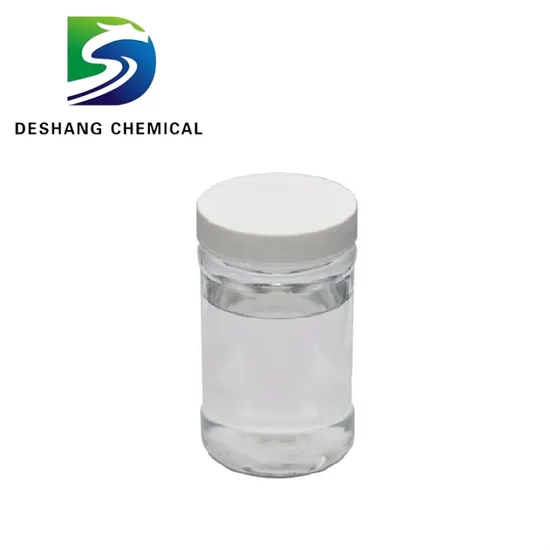
| Appearance | Liquid |
| Quality | Industrial |
| Colour | White |
| Boiling Point | 361.58°C |
| Density | 1.03 G/Ml at 25°C |
| Refractive Index | N20/D1.45 |
| Flash Point | >230°F |
| Specification | 10kg/25kg/100kg |
| Origin | China |
| Production Capacity | 50000kg/Month |
Consistent Crosslinking Performance: Tripropylene Glycol Diacrylate CAS 42978-66-5 for UV Coating Challenges
As a chemical supplier with over a decade of experience serving coating manufacturers and research labs, we've witnessed how inconsistent crosslinker quality can derail production—batch-to-batch viscosity variations causing coating defects, unclear technical data delaying formulation development, and unreliable suppliers missing critical delivery deadlines. These issues aren't just inconvenient; they directly impact product performance and research reproducibility.
Stable Supply of Tripropylene Glycol Diacrylate for Reliable UV Coating Formulations
Our Tripropylene Glycol Diacrylate (CAS 42978-66-5) addresses these challenges by providing consistent industrial-grade quality backed by a 50,000kg monthly production capacity. As a key UV Coating Crosslinker, it integrates seamlessly into flexible coating systems, ensuring predictable curing behavior and stable performance across production runs. We source directly from verified upstream factories, eliminating middlemen and ensuring supply chain transparency for our global customers.
Industrial Applications of Tripropylene Glycol Diacrylate
This Diacrylate Crosslinker is primarily used as a reactive diluent and crosslinking agent in UV-curable formulations, particularly in flexible coating applications where elasticity and adhesion are critical. Its unique molecular structure contributes to improved film flexibility and chemical resistance, making it suitable for industrial coatings, adhesives, and inks. All applications are strictly limited to industrial manufacturing and laboratory research environments.
Key Specifications Impacting Coating Performance
The 1.03 g/ml density at 25°C ensures consistent mixing ratios in formulation, preventing viscosity fluctuations that can cause uneven coating thickness. With a boiling point of 361.58°C, it maintains stability during high-temperature processing steps, reducing volatile organic compound emissions. The refractive index of N20/D1.45 is crucial for optical coating applications, ensuring clarity and light transmission. Most importantly, the industrial-grade quality guarantees minimal impurities that could otherwise lead to coating yellowing or reduced mechanical strength.
Benefits of Quality-Assured Flexible Coating Crosslinker
Using our Tripropylene Glycol Diacrylate reduces production risks compared to lower-quality alternatives—fewer coating defects mean less material waste and rework, directly lowering production costs. Our rigorous quality control aligns with industry standards, ensuring compliance with global chemical regulations for export markets. The stable supply chain prevents production downtime, while the available packaging sizes (10kg/25kg/100kg) accommodate both small-batch R&D needs and large-scale manufacturing requirements.
Our Quality Commitment for Your Confidence
Every batch of Tripropylene Glycol Diacrylate undergoes comprehensive testing, including HPLC purity analysis and viscosity measurement, with results documented in a Certificate of Analysis (COA) provided with each shipment. Our production facility operates under strict quality management protocols, ensuring batch-to-batch consistency. If technical parameters do not meet the specified values, we offer unconditional replacement. Our technical support team, with backgrounds in coating chemistry, provides application guidance to optimize formulation performance.
Certificate of Analysis & Documentation
Each delivery includes a batch-specific COA and MSDS, containing detailed safety and technical information. For research institutions requiring additional verification, specific批次检测数据 can be requested using the order number. Comprehensive technical documentation supports regulatory compliance and formulation development.
Storage & Handling
- Store in a cool, dry, well-ventilated area, sealed and away from direct sunlight.
- Keep away from incompatible materials, food and feed sources.
- Handle with appropriate personal protective equipment (gloves, goggles, lab coat).
- Follow good industrial hygiene practices. Avoid inhalation and skin contact.
- Refer to MSDS for detailed storage and safety instructions.
Streamlined Procurement Process for Your Convenience
Initiate your order by contacting our sales team with your specific requirements—whether for small-batch research or large-scale production. We provide detailed technical specifications and sample availability for evaluation. Once specifications are confirmed, our standard transaction process ensures timely delivery with full documentation. Our team remains available for post-purchase technical support to optimize your application.
Frequently Asked Questions
Q: What is the shelf life of Tripropylene Glycol Diacrylate?
A: When stored properly in sealed containers away from light and heat, the product typically maintains stability for 12 months from the manufacturing date.
Q: Can this product be used in food or pharmaceutical applications?
A: No. This product is for industrial and laboratory research use only, not for direct human consumption, therapeutic, or household use.
Q: What documentation is provided with each shipment?
A: Each shipment includes a Certificate of Analysis (COA) and Material Safety Data Sheet (MSDS) specific to the batch.
Q: Are custom packaging sizes available?
A: Standard packaging is 10kg/25kg/100kg. For special requirements, please contact our sales team to discuss feasibility.
Q: How is product purity verified?
A: Purity is verified through HPLC analysis, with results reported in the batch-specific COA. Additional testing methods can be arranged upon request.