


For industrial manufacturing and laboratory research purposes only.
Product Specifications
| Parameter | Value |
|---|---|
| Product Name | N-(Carboxymethyl)-N-(phosphonomethyl)-Glycine |
| CAS Number | 5994-61-6 |
| EINECS | 227-824-5 |
| Type | Organic Intermediate |
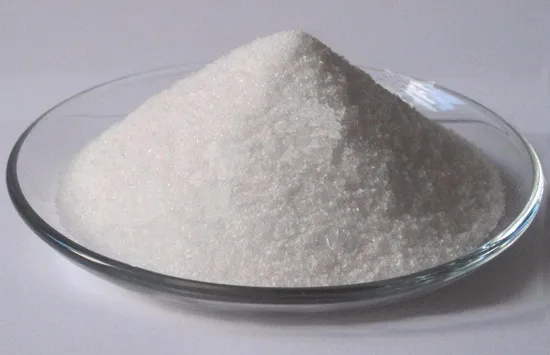
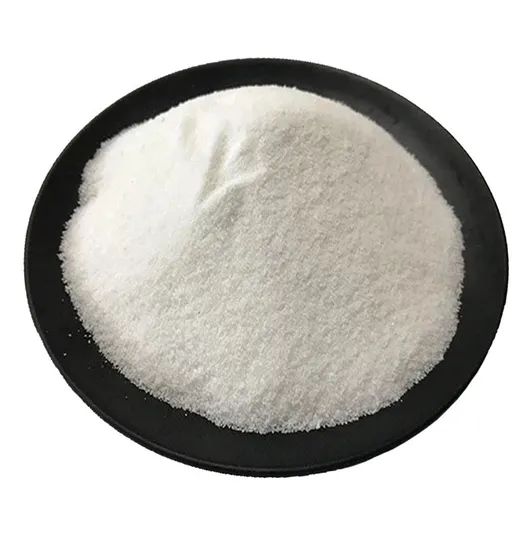
| Appearance | White Powder |
| Quality | Refined |
| Delivery Time | 7~15 Days |
| Transport Package | Land, Sea and Air |
| Specification | 1/25/100kgs per bag |
| Origin | Shandong China |
| Production Capacity | 50,0000 Pieces Per Year |
Overcoming R&D Bottlenecks with N-(Carboxymethyl)-N-(phosphonomethyl)-Glycine CAS 5994-61-6
We’ve witnessed countless R&D teams struggle with inconsistent organic intermediates—impurities causing unexpected side reactions, batch variations derailing experiment reproducibility, and delayed deliveries pushing project timelines off track. After 10+ years supporting chemical research across 50+ countries, these challenges remain all too familiar in laboratory workflows.
A Stable Foundation for Reliable Research Outcomes
Our N-(Carboxymethyl)-N-(phosphonomethyl)-Glycine addresses these critical pain points through refined production processes and strict quality control. As a specialized organic intermediate for R&D use, it provides the consistency researchers need to maintain experimental integrity. Backed by our integrated supply chain from Shandong’s manufacturing hub, we ensure stable availability even for small-batch research requirements.
Key Applications in Organic Synthesis Research
This white powder organic intermediate serves as a versatile building block in synthetic chemistry research, particularly in the development of phosphorus-containing compounds and complex organic molecules. Its unique structure makes it valuable for method development studies and process optimization experiments in laboratory settings, supporting innovation across materials science and chemical manufacturing research.
Critical Quality Parameters for Research Success
The refined quality grade ensures minimal impurity interference, a critical factor when synthesizing complex molecules where trace contaminants can invalidate results. Its white powder appearance provides visual confirmation of purity, while the available packaging sizes (1/25/100kgs) accommodate both initial screening experiments and scaled-up synthesis trials. Consistent particle size distribution further enhances dissolution behavior and reaction kinetics reproducibility across experiments.
Why Quality Intermediates Deliver Long-Term Value
Choosing substandard organic intermediates may seem cost-effective initially, but the hidden costs—failed experiments, extended timelines, and irreproducible results—far outweigh the savings. Our product adheres to strict manufacturing standards, reducing experimental variability and ensuring research investments yield meaningful data. With a production capacity of 500,000 pieces annually, we guarantee stable supply even as your research scales from laboratory to pilot production.
Our Commitment to Research Reliability
Every batch of N-(Carboxymethyl)-N-(phosphonomethyl)-Glycine undergoes comprehensive testing before release, with analytical methods tailored to detect potential impurities relevant to organic synthesis. Our quality control protocols follow industry best practices, ensuring each shipment meets the specifications critical to research success. With dedicated technical support staff available to address application questions, we provide more than just a product—we deliver research confidence.
Certificate of Analysis & Documentation
Each order includes a detailed Certificate of Analysis (COA) specific to your product batch, verifying key quality parameters. Material Safety Data Sheets (MSDS) are provided with every shipment, containing essential handling and safety information for laboratory personnel. For research publications requiring detailed characterization data, additional analytical documentation can be requested for your specific batch.
Storage & Handling
- Store in a cool, dry, well-ventilated area, sealed and away from direct sunlight.
- Keep away from incompatible materials, food and feed sources.
- Handle with appropriate personal protective equipment (gloves, goggles, lab coat).
- Follow good industrial hygiene practices. Avoid inhalation and skin contact.
- Refer to MSDS for detailed storage and safety instructions.
Simple Ordering Process for Research Needs
Initiate your order by consulting our technical team to confirm specifications matching your research requirements. Request a sample for initial evaluation, then proceed with your desired quantity once performance is verified. All orders include comprehensive documentation to support your research compliance and reporting needs.
Frequently Asked Questions
Q: What is the shelf life of this product when properly stored?
A: When stored according to the recommended conditions in the original sealed packaging, the product maintains stability for 24 months from the date of manufacture.
Q: Can this product be used in food, pharmaceutical, or medical applications?
A: No, this product is explicitly for industrial and laboratory research use only, and is not suitable for human consumption, therapeutic, or household applications.
Q: What documentation is provided with each shipment?
A: Every order includes a Certificate of Analysis (COA) specific to the batch and a Material Safety Data Sheet (MSDS) with safety handling information.
Q: Are custom packaging sizes available beyond the standard options?
A: For research-scale requirements, we offer standard packaging in 1kg, 25kg, and 100kg bags. Custom packaging may be available for large-volume industrial orders.
Q: How is product purity verified and guaranteed?
A: Each batch undergoes refined quality control testing during production, with the COA providing specific purity data for your reference and verification.